

Jun 4, 2026
Sander Geysen | Account Manager, Precision AQ
In omnichannel planning, reach and impact have long been the dominant metrics guiding channel selection and investment. They tell us which channels matter most for reaching HCPs and driving market level outcomes.
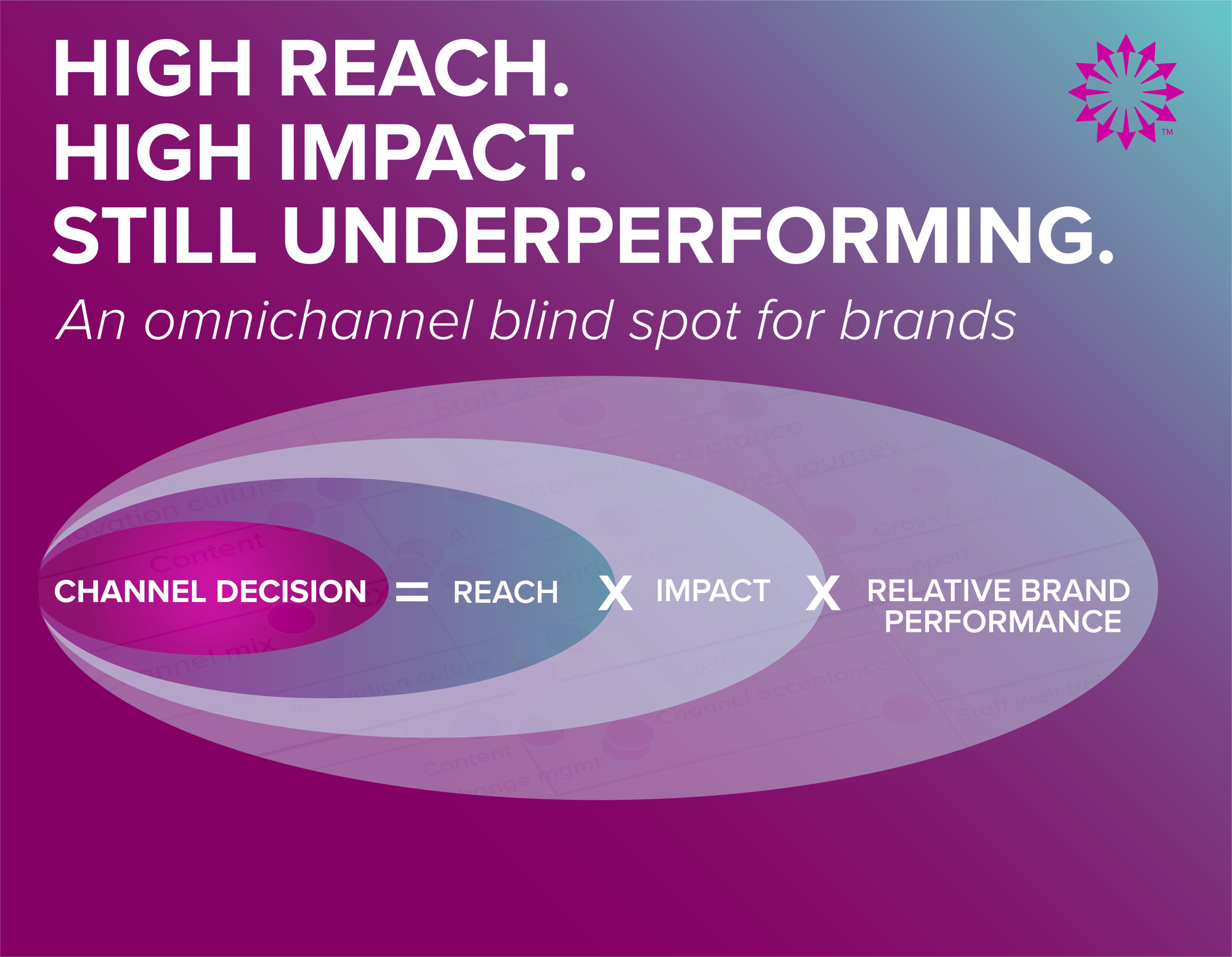
But in competitive markets, this logic has a blind spot: high reach, high impact channels do not work equally well for every brand. Without accounting for relative brand performance, omnichannel strategies risk optimising presence — while competitors optimise results.
Most organisations still arrive at channel decisions using a simple equation:
Channel decision = Reach × Impact
From a planning perspective, this is entirely rational. Reach and impact are the right metrics to determine which channels matter, and they provide a solid foundation for structuring an omnichannel mix.
However, this approach implicitly assumes that all brands benefit equally from those channels.
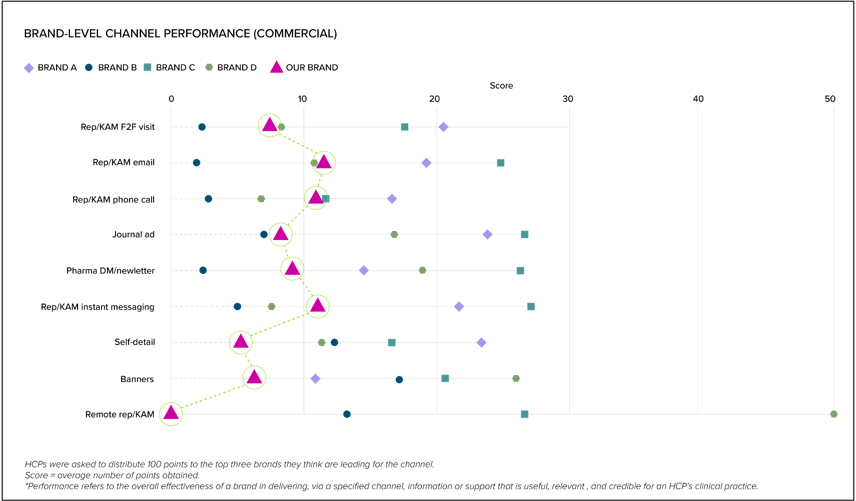
In reality, that assumption rarely holds. Within the same competitive environment, brands perform very differently across the same channels. Some consistently outperform others — not because they are more present, but because they execute better. Differences in content quality, user experience, frequency and integration across touchpoints all contribute to how effectively a channel works for a given brand.
This means that a channel with high reach and strong market-level impact can still underdeliver for an individual brand. And when that happens, simply increasing investment to generate more volume will not close the gap.
A more complete view of omnichannel decision making therefore needs to incorporate relative brand performance:
Channel decision = Reach × Impact × Relative brand performance
This shifts the role of each metric. Reach and impact define where a brand needs to play. Relative performance determines whether you can actually win in that space.
The implication is subtle but important. A channel can remain strategically indispensable, yet still represent a competitive weakness if execution within that channel is not strong. In those situations, the question is no longer only how much to invest to drive more volume, but how to improve what is already in place — by understanding how competitors are activating the same channel more effectively.
Organisations that make this shift move beyond validating their omnichannel presence. They begin to systematically strengthen it.
That is ultimately the difference between being present in the omnichannel landscape and building a true competitive advantage — enabled by bringing reach, impact and brand performance together through Navigator365® Benchmark.
If you want to understand how your brand truly performs across channels and where competitive advantage can be unlocked, click here to explore Navigator365 Benchmark and book a short exploratory call with one of our experts to access tailored insights.